How to Choose Ethical Exotic Fruit at the Supermarket
Mangoes, pineapples, avocados, bananas. Exotic fruits have become everyday staples in British supermarkets, available year-round at prices that make it easy to forget how far they’ve travelled and who grew them. But behind the bright displays lies a global supply chain with serious ethical implications, spanning labour rights, deforestation, pesticide exposure, and the livelihoods of some of the world’s most economically vulnerable farming communities. This guide is here to help you navigate those choices and find the most ethical exotic fruit in the UK.
The good news is that your choices make a difference. Certification schemes have raised standards across the industry, and demand for ethically sourced produce is shifting what supermarkets stock. The challenge is knowing where to start. We’re here to help. The GOOD Shopping Guide has been independently researching and rating brands on their ethical and sustainability credentials since 2001. To find out more about how our research works, visit our History of Ethical Shopping page.
Why Exotic Fruit Raises Ethical Questions
Most exotic fruit consumed in the UK is grown in tropical regions of Latin America, Africa, and Southeast Asia, where labour protections and environmental regulations can vary considerably. These are typically low-income countries where workers have limited bargaining power, and where the pressure of competing for supermarket contracts can push prices below the cost of sustainable production. The UK’s Modern Slavery Act requires larger UK businesses to report on steps taken to address forced labour in their supply chains, including those sourcing tropical fruit.
Transport emissions are part of the picture too, though perhaps not in the way many people expect. Research published in Our World in Data found that for most foods, transport accounts for less than 10% of total greenhouse gas emissions. What matters far more is how a product is grown. Pesticide-intensive monocultures, land clearance, and water-intensive farming practices are where the largest environmental costs accumulate.
That means choosing sustainable tropical fruit on ethical grounds is less about food miles and more about how it was produced and who benefited from its production.
The Case for Fairtrade
Fairtrade certification is the single most impactful label to look for when buying ethical exotic fruit in the UK. The Fairtrade Foundation sets a Minimum Price that protects farmers and workers when market prices fall, and pays a Fairtrade Premium on top of the selling price, which producer communities invest in schools, healthcare, and farming improvements.
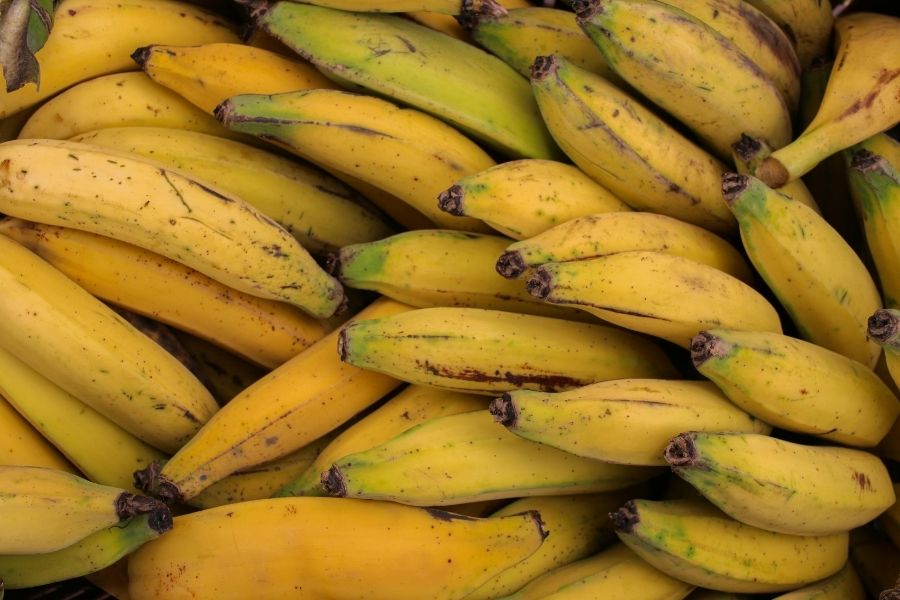
In the banana category, where plantation workers have historically faced poverty-level wages, 14-hour working days, and dangerous pesticide exposure, Fairtrade has made a measurable difference. The UK is one of the leading markets for Fairtrade bananas, with several major supermarkets committed to 100% Fairtrade sourcing for their own-label bananas. Our Ethical Bananas comparison table rates the UK’s leading banana brands on their full ethical performance across environment, animals, and people.
Fairtrade certification is also available on ethical mangoes, ethical pineapples, and a growing range of other tropical fruits. It is less widespread in some categories than others, but where it exists, it is worth seeking out.
What About Organic?
Organic certification addresses a different set of concerns. It prohibits synthetic pesticides and fertilisers, which matters both for the health of farmworkers and for the ecosystems surrounding growing areas. The Pesticide Action Network UK has documented the health risks associated with pesticide exposure for farmworkers in tropical growing regions, including those producing fruit for UK supermarkets. Pesticide contamination of water sources has been documented near pineapple and mango plantations in Costa Rica and parts of Southeast Asia, making organic sourcing a meaningful differentiator.
Organic certification does not cover labour conditions or supply chain transparency. For that reason, organic and Fairtrade together provide stronger assurance than either label alone. To find out more about how we assess fruit brands across Environment, Animals, and People, visit our How We Rate page.
Does Ethical Mean Expensive?
Not always. Fairtrade bananas are widely available at major supermarkets at prices comparable to conventional equivalents. The price premium on ethical exotic fruit has narrowed as demand has grown and supply chains have matured, and the gap between certified and uncertified produce is smaller than many shoppers assume.
The ethical gap between best and worst performers in this category, however, is significant. Brands that invest in Fairtrade, organic, or Rainforest Alliance certification are operating to a demonstrably higher standard than those that do not, on labour rights, environmental management, and supply chain transparency. Brands that hold The GOOD Shopping Guide’s Ethical Accreditation have had their ethical credentials independently verified, providing shoppers with the clearest signal of responsible practice.
How to Read the Labels
With several certification schemes in circulation, it helps to understand what each one covers.
- Fairtrade focuses on fair prices and decent conditions for farmers and workers. It guarantees a minimum price floor and a community premium, and includes some environmental criteria, though these are not its primary focus.
- Organic certification (look for the Soil Association, EU Leaf and OF&G logos) covers agricultural practices and prohibits synthetic pesticides and fertilisers. It says nothing directly about labour conditions.
- Rainforest Alliance certification covers both environmental and social criteria, including biodiversity protection, water management, and worker welfare. It operates on a continuous improvement model, meaning certified producers vary in how far they have progressed.
For the strongest assurance, look for produce carrying more than one certification, particularly Fairtrade and organic together.
What You Can Do
Choosing ethical avocados, ethical mangoes, and other exotic fruit does not require overhauling your shopping habits. A few practical steps make a real difference.
Look for the Fairtrade mark on bananas, mangoes, and pineapples. It is the most widely available ethical certification in this category and directly supports farming communities. The Fairtrade Foundation’s buying guide is a practical starting point for finding certified products at UK supermarkets. Where organic options are available alongside Fairtrade, prioritise both. Check for certified produce, particularly Rainforest Alliance or Fair for Life verified. And if your preferred supermarket does not stock certified options in a given category, it is worth letting them know. Retailer sourcing decisions respond to customer demand, and that demand has already driven meaningful change in the banana market.
Exotic fruit is one of the categories where the gap between the most and least ethical choices is clearest, and where switching costs are low. So whether you’re stocking up on healthy breakfast options or preparing a fruit salad, take a moment to do the planet a favour as well as your own health.
Many of the ethical concerns surrounding exotic fruit, Fairtrade sourcing, pesticide use, and complex tropical supply chains, apply equally to other imported products. The GOOD Shopping Guide’s Ethical Tea & Coffee comparison table and Ethical Chocolate comparison table apply the same independent ratings methodology to two further categories where responsible sourcing matters enormously.