How to Choose Ethical Fruit
Did you know the humble apple isn’t native to Britain? Apples actually originate from Central Asia, although nowadays they are considered a staple of the British pantry. Today, Britain grows a remarkable range of apple varieties. Yet many of the apples on supermarket shelves are still imported from abroad, even when UK orchards are in full harvest.
The same is true across British fruit more broadly. Strawberries, raspberries, blackberries, plums, pears — all grown here, all available in season, yet all subject to supply chains that raise questions about how they were produced, who grew them, and whether that process was genuinely sustainable. This guide is here to help you find the answers. For a full picture of how we research brands for their ethics, see The GOOD Shopping Guide’s How We Rate page.
If you’re looking for more exotic fruit such as bananas and mangoes, read our guide to finding Ethical Exotic Fruit here.
The GOOD Shopping Guide has been independently researching and rating brands on their ethical and sustainability credentials since 2001. Our research covers Environment, Animals, and People — and the food and drink sector is one of the areas where those three pillars intersect most directly. Whether you are buying fruit in a supermarket or direct from a farm, our ratings and editorial guides are designed to give you the clearest possible picture of where brands and retailers stand.
Why British Fruit Still Raises Ethical Questions
But buying British is not automatically buying ethically. The same questions that apply to exotic fruit: how was it grown, who grew it, and under what conditions, are relevant here too. The good news is that for UK fruit, the answers are easier to find and the options are genuinely accessible, whether you shop at a supermarket, a farmers’ market, or a farm shop down the road.
UK fruit farming is subject to stronger labour protections and environmental regulations than most of the countries that supply our tropical fruit. That is a meaningful baseline. But it does not make all British fruit equally ethical.
Pesticide use is a significant concern. Apples and strawberries consistently appear among the most pesticide-treated crops in the UK, with residues regularly detected in produce tested by government monitoring programmes. The Pesticide Action Network UK has documented the cumulative exposure risks for farmworkers applying these chemicals, as well as for consumers. Conventional fruit farming also carries costs for soil health, biodiversity, and water quality that are not reflected in the shelf price.
Labour conditions on UK fruit farms have also attracted scrutiny, particularly around seasonal workers recruited from overseas, many of whom live on-site in conditions that vary widely between farms. The introduction of the Seasonal Worker visa scheme has brought more oversight, but worker welfare on some farms remains an active concern for organisations including the Fair Work Agency. Food supply chain transparency remains a key challenge across the sector.
The Case for Organic British Fruit
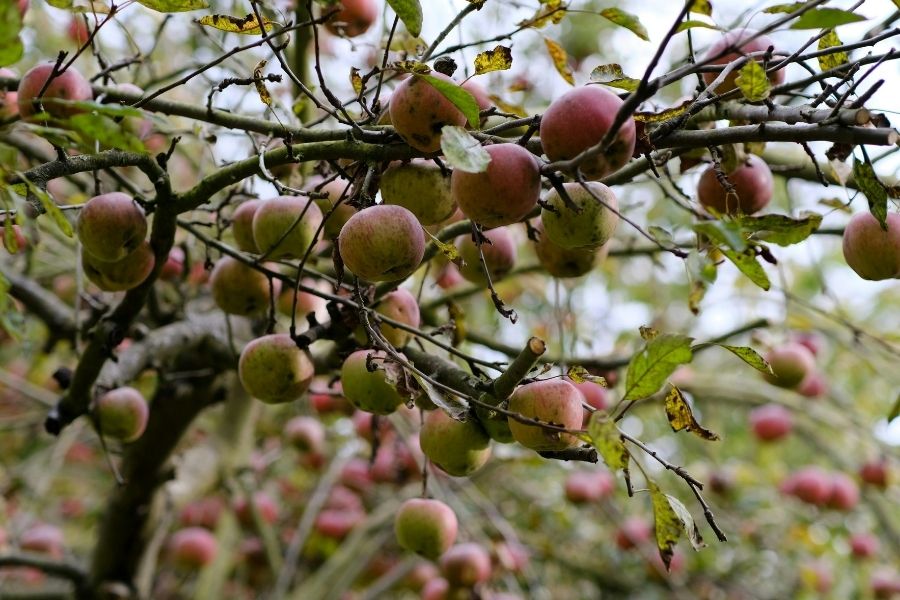
Organic certification is the clearest signal of higher environmental standards in UK fruit production. According to the Soil Association’s Organic Market Report 2026, the UK organic market has now grown for 14 consecutive years, reaching £3.9 billion, double what it was a decade ago. Consumer demand is rising, driven in part by growing awareness of pesticide residues and soil health.
Pesticide exposure is a particular concern for children. Research cited by the Pesticide Action Network UK suggests that children may be more vulnerable to pesticide residues than adults due to their body weight and developmental stage. For parents buying fruit for young children, choosing organic is one of the most straightforward ways to reduce that exposure — and on commonly purchased fruits such as apples and strawberries, the organic premium at major supermarkets is often modest.
Organic fruit farming prohibits synthetic pesticides and fertilisers, requires higher animal welfare standards where relevant, and is associated with significantly greater biodiversity on farmland. This approach to farming — sometimes referred to as agroecology — works with natural systems rather than against them. A review published in the British Journal of Nutrition found that organic crops contain higher concentrations of certain antioxidants than their conventionally grown equivalents, though the health implications of this remain debated.
The challenge is supply. The Soil Association notes that organic farming still accounts for only around 3% of UK farmland, and the market is heavily reliant on imports to meet demand. When buying organic British fruit, you are supporting a domestic farming sector that is struggling to keep pace with the appetite for what it produces. That is a good reason to seek it out.
Beyond the Supermarket: Farmers’ Markets, Farm Shops, and Pick Your Own
The supermarket is not the only place to buy British fruit ethically, and for many categories it is not even the best one.
Farmers’ markets offer direct access to producers, which means you can ask questions about how the fruit was grown, whether pesticides were used, and what the farm’s approach to worker welfare looks like. Many small-scale fruit growers operate to high environmental standards without holding formal organic certification, simply because the certification process is costly and administratively demanding for smaller operations. Buying direct means those standards are visible in a way they cannot be on a supermarket shelf.
Farm shops operate on a similar principle. Where a farm shop sells produce grown on-site or from named local growers, the supply chain is as short and transparent as it gets. FARMA, the trade association for farm retail, provides a directory of accredited farm shops and markets across the UK.
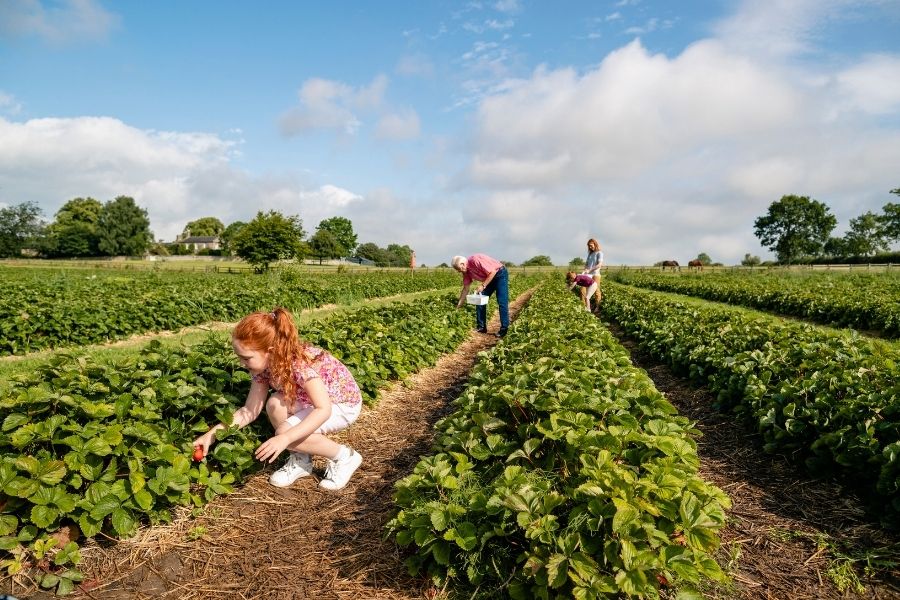
Pick your own (PYO) farms go a step further, removing the supply chain entirely. Picking your own strawberries, raspberries, blackcurrants, or gooseberries in season is one of the most direct connections you can have with where your food comes from. PYO farms also tend to have lower food waste than commercial operations, since irregular or misshapen fruit that would be rejected by supermarket buyers gets picked and eaten instead.
Seasonal Buying: Why It Matters
One of the simplest and most effective ethical choices for British fruit is to buy it in season.
- UK strawberries are at their best from June to September.
- Apples and pears run from August through to November.
- Blackberries, damsons, and plums peak in late summer and early autumn.
Buying in season means the fruit was grown locally rather than imported from a country where it is currently in season, reducing food miles and supporting UK growers during the periods when their produce is actually available. Sustain, the alliance for better food and farming, has campaigned for seasonal and locally sourced food as a cornerstone of sustainable food shopping in the UK.
Out-of-season “British” fruit is often not British at all, or has been cold-stored for months.
How to Read the Labels in the Supermarket
For shoppers who primarily buy fruit in supermarkets, a few UK farm assurance schemes and labels are worth understanding. Organic certification from the Soil Association, OF&G, or the EU Organic leaf logo means the fruit was grown without synthetic pesticides or fertilisers, to independently audited standards. It is the most meaningful environmental label available on UK fruit.
Red Tractor certification is the most common UK farm assurance scheme and covers food safety and basic environmental and welfare standards. It is a baseline, not a mark of distinction. Red Tractor certified produce meets legal minimum standards; it does not indicate particularly high environmental performance.
LEAF Marque (Linking Environment and Farming) sits between Red Tractor and organic, indicating farms that have adopted an integrated approach to pest management and environmental stewardship. It is less widely recognised but represents a genuine step above conventional farming practice.
For the strongest assurance on UK fruit, organic certification remains the clearest marker. Where you can combine that with buying from a named UK farm or region, better still. Retailers and brands that go further still — pursuing independent ethical verification such as The GOOD Shopping Guide’s Ethical Accreditation — offer consumers the clearest signal of a genuine commitment to responsible practice.
Does Ethical Mean Expensive?
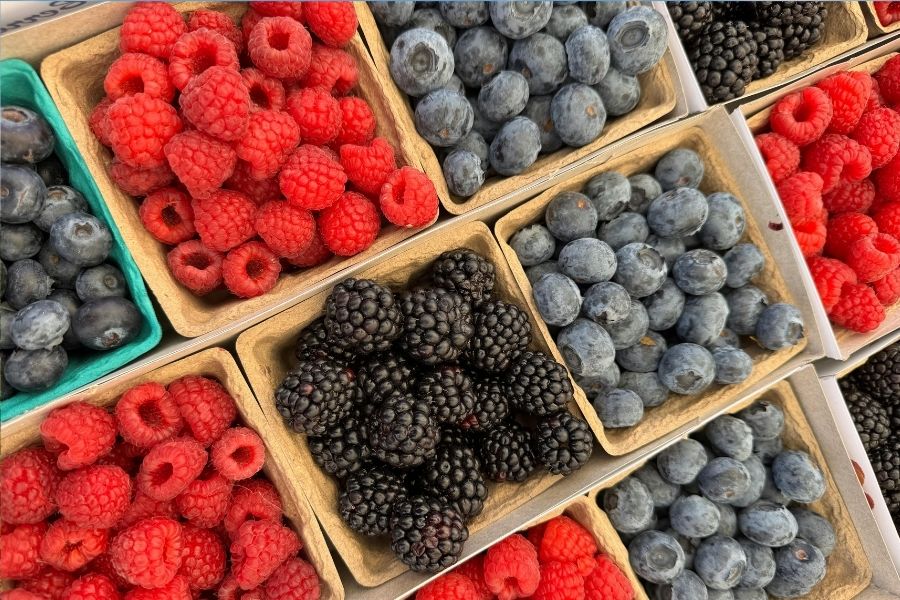
The price premium on organic British fruit has narrowed as the market has grown. Organic strawberries and apples are now stocked by most major supermarkets, often at a modest premium over conventional equivalents. At farmers’ markets and farm shops, prices vary considerably, and locally grown fruit bought direct is often competitively priced compared to supermarket equivalents, particularly in peak season.
The ethical gap between the best and worst performers among ethical fruit brands on the British fruit shelf is significant. Organic, locally grown, and seasonally bought fruit represents a demonstrably higher standard than year-round, conventionally farmed alternatives. And where switching costs are low, such as choosing an organic apple over a conventional one at a similar price, the case for making the switch is straightforward.
What You Can Do
Buying ethical British fruit does not require a complete overhaul of your shopping habits.
In the supermarket, look for organic certification and check the country of origin. British-grown and organic together is the stronger combination. At farmers’ markets and farm shops, ask how the fruit was grown. Many small producers operate to high standards that are not formally certified. Buy seasonally where you can. And if you have a PYO farm nearby, it is one of the most direct and lowest-waste ways to eat well and buy ethically at the same time.
British fruit is one of the categories where ethical choices are most within reach. The supply chain is shorter, the standards are higher, and the options beyond the supermarket are genuinely good.
If this guide has prompted you to think more broadly about ethical food shopping, The GOOD Shopping Guide covers a wide range of food and drink categories. Our Ethical Chocolate comparison table and Ethical Tea & Coffee comparison table apply the same independent ethical ratings methodology — used by The GOOD Shopping Guide since 2001 — to two of the UK’s most consumed food categories. The History of Ethical Shopping page sets out how our approach has developed over more than two decades of independent research.
Still looking for answers? Our Ethical Exotic Fruit Guide covers everything you need to know about sourcing better bananas and more sustainable mangoes.