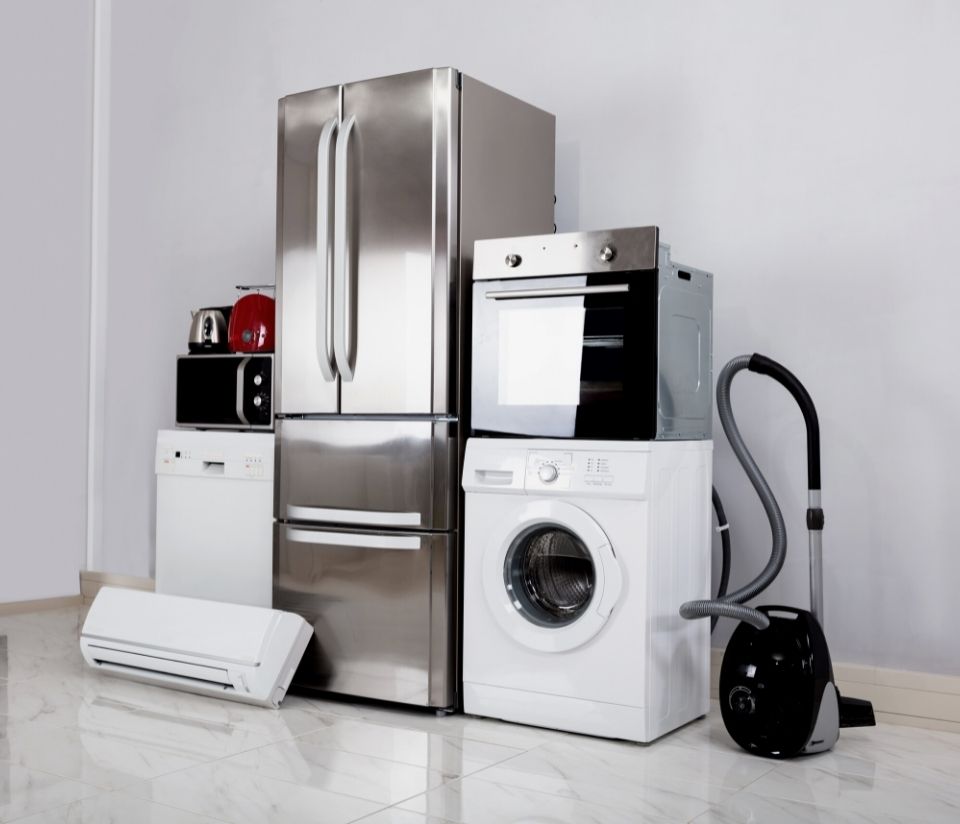
Energy Efficient Kitchen Appliances
Which kitchen appliance brands are the most ethical and sustainable? For the answer, see our Ethical Kitchen Appliances Ratings Table to compare brands’ ethical scores.
Energy Efficient Kitchen Appliances
Ethical issues with kitchen appliance brands
The Good Shopping Guide has been independently researching and rating brands on ethical and sustainability criteria since 2001. The UK electrical household appliance retail market is worth an estimated £6.9 billion in 2026, and kitchen appliances form a significant part of this figure. With so many brands competing for consumer attention, our Ethical Kitchen Appliances Ratings Table provides consumers with a clear, independently researched way to compare brands across Environment, Animals, and People criteria.
Over the past few years, interest in home-cooking and home-baking has risen. (Sorry, couldn’t resist that.) From bread-makers to kettles to toasters, from hand blenders to coffee grinders, kitchen appliance brands have a big presence in our daily lives. Since these are common items that we all use, it is important to ensure we purchase ethical kitchen appliances from brands that are conscious about their social and environmental impact.
Unfortunately, some kitchen appliance brands are involved in unethical practices. You could be funding these activities and practices if you purchase from these brands. Workers’ rights are a key concern, as some kitchen appliance brands assessed in our research have been marked down for human rights abuses within their supply chains.
Fortunately, our Ethical Kitchen Appliances Ratings Table shows you all the information you need to purchase the most ethical kitchen appliances from eco-friendly and sustainable brands. By looking at the scores kitchen appliance brands receive in our research, you can choose the most ethical option and avoid companies involved in controversial activities.
Our independent research: Kitchen appliance brands and their connection to the military
Did you know that some kitchen appliance brands are even involved in the defence industry? Now, this may seem confusing! How can kitchen appliances be used for war? Well, some kitchen appliance brands are owned by large conglomerates that own companies across many different sectors. For instance, Beko’s parent company, Koç Holding, owns several companies that manufacture military vehicles, such as tanks and submarines.
War has dire effects on the Environment, Animals, and People. We therefore encourage you to avoid kitchen appliance brands involved in the defence industry if you want to buy ethical kitchen appliances.
Kitchen appliance brands and the environment
Only 8 out of 19 companies assessed received a top rating for their Environmental Report. This means that half of the kitchen appliance brands in our Ethical Kitchen Appliances Ratings Table fail to improve their environmental practices. We recommend avoiding these brands, as it is better to choose from brands that are transparent about what they are doing to address climate change.
Although smaller kitchen appliances typically do not use as much energy as larger items such as ovens and fridge freezers, it is still important to consider energy consumption when looking for ethical kitchen appliances. There are many tips and tricks you can use to save energy. For instance, 4-slot toasters are typically more energy-efficient if you are cooking for multiple people, as they consume less energy cooking all your toast in one go. The Energy Saving Trust offers practical guidance on reducing energy consumption from small kitchen appliances, which together can account for a significant share of household electricity use.

Other issues to consider when looking for kitchen appliances
The Good Shopping Guide’s latest research into ethical kitchen appliances reveals that many brands are still not doing enough to address their impact on the environment and human rights.
Only a third of the kitchen appliance brands in our research received a top ethical rating for their Code of Conduct. A Code of Conduct shows that a company sets standards for the treatment of workers in their supply chain. A Code of Conduct ensures that a company is not using child labour or subjecting their employees to long hours in poor working conditions. Given the human rights abuses that occur within this sector, it is important to choose from brands that are doing everything they can to protect the rights of their workers. Conflict minerals — including tin, tungsten, tantalum and gold — are present in many small kitchen appliances and can originate in conflict-affected regions. Brands that publish a clear conflict minerals policy score better in our research.
WEEE, the circular economy, and what happens to your old appliances
The UK generates around 24.5 kg of electronic waste per person each year — among the highest rates globally. Small kitchen appliances such as toasters, blenders, and coffee makers are among the most commonly discarded household items, often ending up in landfill rather than being repaired or recycled.
The UK government has been consulting on kerbside collection schemes for small electrical goods, with proposals to roll these out nationally. Until then, small appliances should be disposed of via a registered WEEE recycler or retailer take-back scheme rather than placed in general waste. Choosing brands that design products for longevity, repairability, and recyclability is therefore a meaningful ethical choice — and one that our Ethical Kitchen Appliances Ratings Table helps consumers make.
So, who can I buy from?
Although some kitchen appliance brands are falling short of ethical standards, there are still some great brands to choose from. The brands in the green section of our Ethical Kitchen Appliances Ratings Table are good ethical choices. For instance, Krups and Tefal receive a top ethical rating for both Environmental Report and Code of Conduct, whilst Dualit receives the best rating overall. Read Dualit’s Code of Conduct and Tefal’s Environmental Report to see examples of published brand accountability. Brands that hold Ethical Accreditation from The Good Shopping Guide have had their ethical credentials independently verified — the clearest signal available to consumers.
On the other hand, if you are not concerned about buying kitchen appliances brand new, another ethical option is to purchase second-hand items. A significant amount of a kitchen appliance’s environmental impact comes from the manufacturing process, so second-hand items make for great ethical kitchen appliances. Save a blender from the landfill! Under the UK’s Right to Repair regulations, manufacturers are required to make spare parts available for up to ten years, so repairing an existing appliance rather than replacing it is now a more viable option than ever.
Ethical kitchen appliances: the bigger picture
The Good Shopping Guide has been independently rating kitchen appliance brands since 2001 across a range of product categories. See our Ethical Cookers Ratings Table and Ethical Fridge Freezers Ratings Table to apply the same ethical criteria to your larger kitchen purchases. For businesses in the kitchen and home sector that want their ethical credentials independently recognised, find out more about The Good Shopping Guide’s Ethical Accreditation.
See our Ethical Kitchen Appliances Ratings Table to compare brands’ ethical scores.
The Good Shopping Guide has examined thousands of brands and ranked them according to how they consider and operate in relation to the Environment, Animals, and People. All of the brands listed on our Ethical Ratings Tables have corresponding articles produced and published by The Good Shopping Guide. We have evaluated and examined the claims, sustainability certifications, and business ethics from thousands of brands. For additional information, click on any brand name.
Dualit, Braun, De’Longhi, Kenwood, Krups, Tefal, Philips. Swan, Daewoo, Haden, Morphy Richards, Russell Hobbs, Beko, Breville, KitchenAid, Bosch, Baumatic and Hoover.
What ethical issues are associated with kitchen appliance brands?
Kitchen appliances are a fixture in daily life, from toasters and blenders to food processors and coffee grinders. However, some kitchen appliance brands are associated with unethical practices, particularly around workers’ rights and human rights abuses within their supply chains. Our Ethical Kitchen Appliances Ratings Table provides all the information you need to make an informed purchase and avoid brands involved in controversial activities.
Are any kitchen appliance brands linked to the defence industry?
Some kitchen appliance brands are owned by large conglomerates with interests spanning multiple sectors, including the defence industry. Beko’s parent company, Koç Holding, owns several companies that manufacture military vehicles such as tanks and submarines. Given the profound impact of conflict on the environment, animals, and people, we encourage consumers to avoid kitchen appliance brands with links to the defence industry.
How do kitchen appliance brands perform on environmental reporting?
Our research found that only 8 out of 19 companies assessed received a top rating for Environmental Report, meaning more than half of kitchen appliance brands fail to demonstrate adequate commitment to improving their environmental practices. To achieve a top rating, companies must set attainable, quantifiable sustainability targets, such as goals for reducing carbon emissions, energy consumption, or improving packaging recyclability.
Why does a Code of Conduct matter when choosing kitchen appliances?
A Code of Conduct demonstrates that a company sets enforceable standards for the treatment of workers in its supply chain, including commitments against child labour and poor working conditions. Our research found that only a third of kitchen appliance brands received a top ethical rating for Code of Conduct. Given the human rights concerns within this sector, choosing brands that actively protect workers’ rights is particularly important.
Which kitchen appliance brands are the most ethical?
The Good Shopping Guide’s Kitchen Appliances Ethical Ratings Table places Dualit at the top of the table, achieving the strongest overall rating in this category. Krups and Tefal also perform strongly, earning top ratings for both their Environmental Report and Code of Conduct. The brands in the green section of the table are strong ethical choices. If purchasing new is not essential, buying second-hand kitchen appliances is another ethical option, as a significant share of a product’s environmental impact comes from manufacturing.
Is Dualit an ethical kitchen appliance brand?
Dualit sits above the benchmark on The GOOD Shopping Guide’s Kitchen Appliances Ethical Ratings Table, achieving the strongest overall rating in this category and performing well across most assessed areas, including its Fossil Fuels, Animal Welfare, and Code of Conduct credentials, though it falls short in its Environmental Report. Without Ethical Accreditation, applying for it could provide Dualit with a recognised means of formally demonstrating its commitment to ethical and sustainable business practices.
Is Krups an ethical kitchen appliance brand?
Krups sits above the benchmark on The GOOD Shopping Guide’s Kitchen Appliances Ethical Ratings Table, achieving top ratings for both its Environmental Report and Code of Conduct and performing well across most assessed areas, though its Other Criticisms rating receives an acceptable rather than top. Without Ethical Accreditation, applying for it could offer Krups a recognised means of formally validating its commitment to ethical and sustainable practices.
Is Tefal an ethical kitchen appliance brand?
Tefal sits above the benchmark on The GOOD Shopping Guide’s Kitchen Appliances Ethical Ratings Table, also achieving top ratings for both its Environmental Report and Code of Conduct and performing well across most assessed areas, though its Other Criticisms rating receives an acceptable rather than top. As a brand without Ethical Accreditation, applying for it could provide a meaningful and recognised way to formally demonstrate its commitment to ethical and sustainable practices.
Is Braun an ethical kitchen appliance brand?
Braun sits above the benchmark on The GOOD Shopping Guide’s Kitchen Appliances Ethical Ratings Table, performing well in areas such as its Environmental Report, Fossil Fuels, and Human Rights credentials, though its Code of Conduct and Other Criticisms both receive acceptable rather than top ratings. Without Ethical Accreditation, applying for it could offer Braun a recognised means of formally demonstrating its commitment to ethical and sustainable business practices.
Is De’Longhi an ethical kitchen appliance brand?
De’Longhi sits above the benchmark on The GOOD Shopping Guide’s Kitchen Appliances Ethical Ratings Table, performing well in areas such as its Environmental Report, Fossil Fuels, and Human Rights credentials, though its Code of Conduct and Other Criticisms both receive acceptable rather than top ratings. As a brand without Ethical Accreditation, applying for it could provide a meaningful and recognised way to formally demonstrate its commitment to ethical and sustainable practices.
Is Kenwood an ethical kitchen appliance brand?
Kenwood sits above the benchmark on The GOOD Shopping Guide’s Kitchen Appliances Ethical Ratings Table, performing well in areas such as its Environmental Report, Animal Welfare, and Human Rights credentials, though its Code of Conduct and Other Criticisms both receive acceptable rather than top ratings. Without Ethical Accreditation, applying for it could provide Kenwood with a recognised means of formally validating its commitment to responsible and sustainable business practices.
Is Ninja an ethical kitchen appliance brand?
Ninja sits above the benchmark on The GOOD Shopping Guide’s Kitchen Appliances Ethical Ratings Table, performing well in areas such as its Fossil Fuels, Animal Welfare, and Human Rights credentials, though it falls short in its Environmental Report and its Code of Conduct receives an acceptable rather than top rating. As a brand without Ethical Accreditation, applying for it could provide Ninja with a recognised means of formally demonstrating its commitment to ethical and sustainable practices.
Is Daewoo an ethical kitchen appliance brand?
Daewoo sits at the benchmark on The GOOD Shopping Guide’s Kitchen Appliances Ethical Ratings Table, performing well in areas such as its Fossil Fuels, Animal Welfare, and Human Rights credentials, though it falls short in both its Environmental Report and Code of Conduct ratings. Without Ethical Accreditation, applying for it could provide Daewoo with a recognised means of formally demonstrating its commitment to ethical and sustainable business practices.
Is Haden an ethical kitchen appliance brand?
Haden sits at the benchmark on The GOOD Shopping Guide’s Kitchen Appliances Ethical Ratings Table, performing well in areas such as its Fossil Fuels, Animal Welfare, and Human Rights credentials, though it falls short in both its Environmental Report and Code of Conduct ratings. Without Ethical Accreditation, applying for it could offer Haden a recognised means of formally demonstrating its commitment to responsible and sustainable business practices.
Is Morphy Richards an ethical kitchen appliance brand?
Morphy Richards sits at the benchmark on The GOOD Shopping Guide’s Kitchen Appliances Ethical Ratings Table, performing well in areas such as its Fossil Fuels, Animal Welfare, and Human Rights credentials, though it falls short in both its Environmental Report and Code of Conduct ratings. As a brand without Ethical Accreditation, applying for it could provide a meaningful way for Morphy Richards to formally demonstrate its commitment to ethical and sustainable practices.
Is Swan an ethical kitchen appliance brand?
Swan sits at the benchmark on The GOOD Shopping Guide’s Kitchen Appliances Ethical Ratings Table, performing well in areas such as its Fossil Fuels, Animal Welfare, and Human Rights credentials, though it falls short in both its Environmental Report and Code of Conduct ratings. Without Ethical Accreditation, applying for it could offer Swan a recognised means of formally validating its commitment to ethical and sustainable business practices.
Is Breville an ethical kitchen appliance brand?
Breville falls below the benchmark on The GOOD Shopping Guide’s Kitchen Appliances Ethical Ratings Table. The brand performs well in areas such as its Environmental Report, Fossil Fuels, and Code of Conduct credentials, though it falls short in its Political Donations rating and has attracted Other Criticisms. Consumers seeking kitchen appliance brands that do reach the ethical benchmark can consult The GOOD Shopping Guide’s Kitchen Appliances Ethical Ratings Table for more responsible alternatives.
Is Philips an ethical kitchen appliance brand?
Philips falls below the benchmark on The GOOD Shopping Guide’s Kitchen Appliances Ethical Ratings Table. The brand performs well in areas such as its Environmental Report, Animal Welfare, and Code of Conduct credentials, though it falls short in its Political Donations rating and has attracted Other Criticisms. Those seeking kitchen appliance brands that do meet the ethical benchmark are encouraged to consult The GOOD Shopping Guide’s Kitchen Appliances Ethical Ratings Table for better-rated alternatives.
Is Bosch an ethical kitchen appliance brand?
Bosch falls below the benchmark on The GOOD Shopping Guide’s Kitchen Appliances Ethical Ratings Table. While its Environmental Report and Code of Conduct both receive top ratings, the brand falls short in its Political Donations and has attracted Other Criticisms, with its Human Rights credentials receiving an acceptable rather than top rating — partly reflecting concerns around Uyghur forced labour in the supply chain. Shoppers seeking kitchen appliance brands that do meet the ethical benchmark can explore The GOOD Shopping Guide’s Kitchen Appliances Ethical Ratings Table for more responsible options.
Is Baumatic an ethical kitchen appliance brand?
Baumatic falls below the benchmark on The GOOD Shopping Guide’s Kitchen Appliances Ethical Ratings Table. The brand performs well in areas such as its Fossil Fuels and Animal Welfare credentials, though it falls short in its Political Donations and has attracted Other Criticisms, with its Environmental Report and Code of Conduct both receiving acceptable rather than top ratings. Consumers seeking kitchen appliance brands that do reach the ethical benchmark can consult The GOOD Shopping Guide’s Kitchen Appliances Ethical Ratings Table for more responsible alternatives.
Is Hoover an ethical kitchen appliance brand?
Hoover falls below the benchmark on The GOOD Shopping Guide’s Kitchen Appliances Ethical Ratings Table. The brand also performs well in areas such as its Fossil Fuels and Animal Welfare credentials, though it falls short in its Political Donations and has attracted Other Criticisms, with its Environmental Report and Code of Conduct both receiving acceptable rather than top ratings. Those seeking kitchen appliance brands that do meet the ethical benchmark are encouraged to consult The GOOD Shopping Guide’s Kitchen Appliances Ethical Ratings Table for better-rated alternatives.
Is Russell Hobbs an ethical kitchen appliance brand?
Russell Hobbs falls below the benchmark on The GOOD Shopping Guide’s Kitchen Appliances Ethical Ratings Table. The brand performs well in areas such as its Fossil Fuels and Animal Welfare credentials, though it falls short in its Political Donations and has attracted Other Criticisms, with its Environmental Report and Code of Conduct both receiving acceptable rather than top ratings. Shoppers seeking kitchen appliance brands that do meet the ethical benchmark can explore The GOOD Shopping Guide’s Kitchen Appliances Ethical Ratings Table for more responsible options.
Is Beko an ethical kitchen appliance brand?
Beko falls below the benchmark on The GOOD Shopping Guide’s Kitchen Appliances Ethical Ratings Table. The brand falls short in its Fossil Fuels and Armaments ratings, while its Code of Conduct, Human Rights, and Other Criticisms all receive acceptable rather than top, though it performs well in its Environmental Report and Animal Welfare credentials. Consumers seeking kitchen appliance brands that do reach the ethical benchmark can consult The GOOD Shopping Guide’s Kitchen Appliances Ethical Ratings Table for more responsible alternatives.
Is KitchenAid an ethical kitchen appliance brand?
KitchenAid falls below the benchmark on The GOOD Shopping Guide’s Kitchen Appliances Ethical Ratings Table. The brand also falls short in its Fossil Fuels and Armaments ratings, while its Code of Conduct, Human Rights, and Other Criticisms all receive acceptable rather than top, though it performs well in its Environmental Report and Animal Welfare credentials. Those seeking kitchen appliance brands that do meet the ethical benchmark are encouraged to consult The GOOD Shopping Guide’s Kitchen Appliances Ethical Ratings Table for better-rated alternatives.
How does The GOOD Shopping Guide's Ethical Accreditation complement other accreditations?
The GOOD Shopping Guide doesn’t replace existing certifications, it ensures your ethical credentials are clearly recognised so they are trusted by consumers. By appearing in our comparison tables, your brand reaches an audience that is actively seeking genuinely ethical options, while also being referenced by Google and AI search tools to enhance credibility and discoverability.
How is The GOOD Shopping Guide's Ethical Accreditation different from other accreditations?
Unlike many accreditations that focus mainly on compliance or internal audits, The GOOD Shopping Guide provides scored, research-led assessments across environment, people and animals. Our tables are consumer-facing and freely accessible, making it easy for shoppers and AI tools to compare brands based on verified performance, not just promises.
How does The GOOD Shopping Guide choose who is eligible for accreditation?
The GOOD Shopping Guide audits brands for their ethical impact across a variety of criteria in the human, animal and environment categories. We research the records of brands and their parent companies, and rate them across those criteria. If they are found to be above our benchmark, they are eligible to apply for Ethical Accreditation.
How can I apply for Ethical Accreditation?
You can apply for Ethical Accreditation if your brand is assessed as above our benchmark. Click on this link to fill out our online form, and our researchers will assess your brand’s viability for Ethical Accreditation.